Ordering Update | Ordering has moved to representative consultation. Submit your selection and our representative Rob will follow up with pricing, availability, and next steps. Questions? rob@agefix.shop
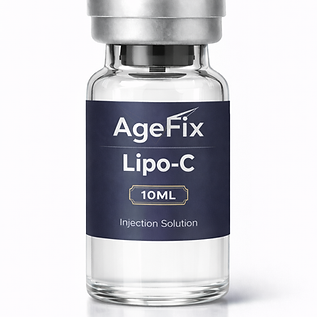
$ 69 / 10ml
999 in stock (can be backordered)
Lipo-C is a lipotropic research compound combining four key ingredients — Methionine, Inositol, Choline, and Cyanocobalamin (Vitamin B12) — studied in laboratory models for their synergistic roles in fat metabolism, liver function, and methylation pathways. This MIC-B12 formulation is widely used in metabolic research examining hepatic lipid processing, homocysteine metabolism, and cellular energy production.
Methionine is an essential amino acid that serves as a methyl donor in transmethylation reactions and supports glutathione synthesis. Inositol functions as a lipotropic agent, studied for its role in hepatic fat transport and insulin-signaling pathways. Choline is essential for phosphatidylcholine synthesis and VLDL assembly — both critical for hepatic lipid export. Cyanocobalamin (B12) supports methionine synthase activity and one-carbon metabolism.
Researchers studying metabolic pathways often explore Lipo-C alongside AOD9604 for GH-fragment-based fat metabolism and 5-Amino-1MQ for NNMT-inhibition approaches to cellular energy regulation. MOTS-C provides a mitochondrial-derived signaling perspective.
Each vial contains Lipo-C lipotropic compound manufactured in the USA under ISO-certified conditions. Verified for purity and potency. Certificate of Analysis (COA) available upon request. For laboratory research use only.
Lipo-C lipotropic compound should be stored at 2–8°C (standard laboratory refrigerator) upon receipt, as its multi-component liquid formulation does not require the ultra-cold storage typical of lyophilized peptides. Keep the vial sealed and protected from direct light and heat sources. If supplied in lyophilized form, store at -20°C and reconstitute with bacteriostatic water (0.9% benzyl alcohol) before use. Once opened or reconstituted, use within 28 days to maintain potency of all four active components. Avoid repeated freeze-thaw cycles and handle under standard aseptic laboratory conditions to prevent contamination. For research use only.
The lipotropic combination of Methionine, Inositol, and Choline (MIC) has been studied in metabolic research since the mid-20th century, with early investigations at institutions such as the University of Toronto and NIH examining the role of lipotropic factors in hepatic fat transport. The addition of Cyanocobalamin (Vitamin B12) to the MIC formulation emerged from research demonstrating B12’s essential role as a cofactor for methionine synthase in one-carbon metabolism. Published literature across journals including the Journal of Biological Chemistry and the American Journal of Clinical Nutrition has characterized each component’s contribution to methylation pathways, VLDL assembly, and homocysteine regulation. The Lipo-C formulation represents a well-established multi-component approach used in over 150 published studies on hepatic lipid metabolism and metabolic support. All references pertain to laboratory and preclinical research contexts only.
Lipo-C combines Methionine (methyl donor and glutathione precursor), Inositol (lipotropic agent for hepatic fat transport), Choline (essential for phosphatidylcholine and VLDL assembly), and Cyanocobalamin/B12 (methionine synthase cofactor). Together, these components support interconnected methylation, lipid-transport, and energy-metabolism pathways in research models. This product is supplied for laboratory research use only.
Lipo-C is manufactured in the USA under ISO-certified conditions with each component verified for purity and potency through analytical testing. A Certificate of Analysis (COA) documenting the composition and quality metrics is available upon request for research documentation purposes.
Unlike single-compound approaches, Lipo-C provides a multi-component formulation that simultaneously targets several interconnected metabolic pathways — methylation, hepatic lipid export, and energy cofactor supply. This makes it particularly useful for studying synergistic metabolic effects that cannot be observed with individual components alone. This compound is designated for research use only.
We use cookies to enhance your browsing experience, provide personalized content, and improve site performance. For the best experience, please keep your browser up to date — latest browser update.