Ordering Update | Ordering has moved to representative consultation. Submit your selection and our representative Rob will follow up with pricing, availability, and next steps. Questions? rob@agefix.shop
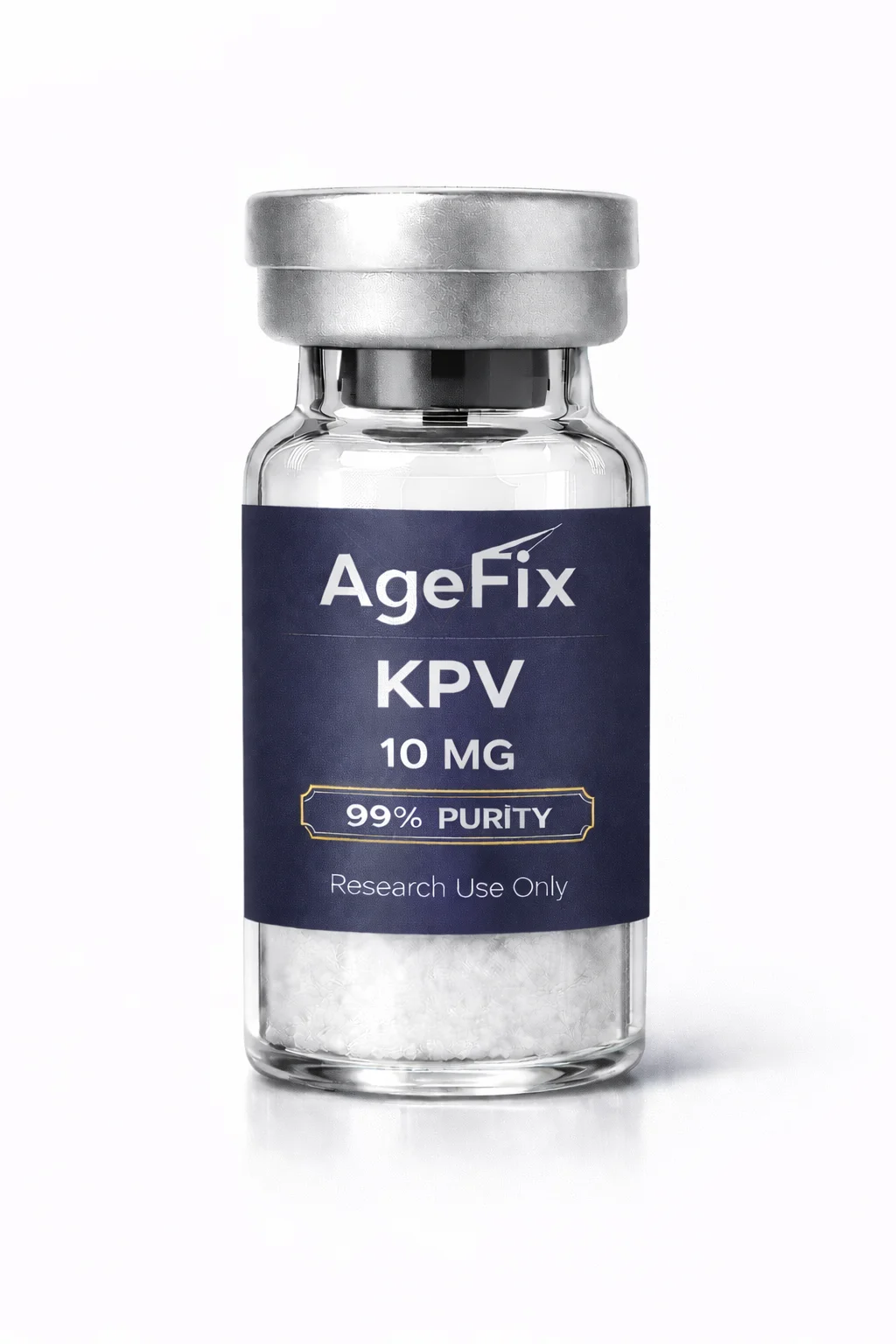
$ 59 / 10mg
999 in stock (can be backordered)
KPV (Lys-Pro-Val) is a naturally derived tripeptide fragment from alpha-melanocyte-stimulating hormone (α-MSH) studied in preclinical models for its potent anti-inflammatory and tissue-repair properties. Unlike full-length α-MSH, KPV peptide retains the anti-inflammatory signaling while lacking melanocortin-receptor-mediated pigmentation effects — making it a focused tool for inflammation and mucosal-healing research.
KPV peptide modulates NF-κB signaling, a master regulator of inflammatory gene expression. In cell-culture and colitis models, KPV has been shown to suppress pro-inflammatory cytokine production (TNF-α, IL-6, IL-1β) and promote mucosal barrier integrity. Research suggests it can be transported across intestinal epithelial cells, enabling direct interaction with immune cells in the gut-associated lymphoid tissue (GALT).
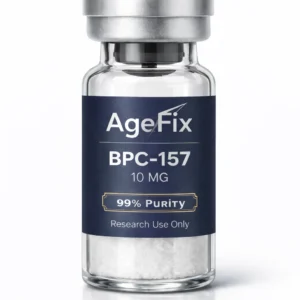
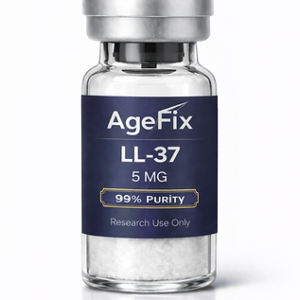
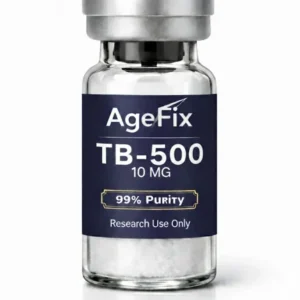
Researchers studying gut health and tissue repair often pair KPV with BPC-157, which targets gastric-peptide-based healing pathways, and LL-37, which provides antimicrobial defense alongside tissue-repair signaling. For broader regenerative studies, the BPC-157 + TB-500 combo offers a multi-pathway approach.
Each vial contains KPV peptide manufactured in the USA under ISO-certified conditions. Verified to ≥99% purity by HPLC analysis, with endotoxin screening below 0.1 EU/mg. Certificate of Analysis (COA) available upon request. For laboratory research use only.
Lyophilized KPV peptide should be stored at -20°C upon receipt to preserve its anti-inflammatory activity and structural stability. Keep vials sealed and protected from light, heat, and moisture during storage. For reconstitution, use bacteriostatic water (0.9% benzyl alcohol) and allow the lyophilized powder to dissolve gently without vortexing. Once reconstituted, store the peptide solution at 2–8°C and use within 28 days to ensure consistent bioactivity. As a small tripeptide, KPV is particularly sensitive to degradation from repeated freeze-thaw cycles, so aliquoting into single-use volumes is recommended. Handle under standard aseptic laboratory conditions. For research use only.
KPV (Lys-Pro-Val) was first identified as the C-terminal tripeptide fragment of α-MSH responsible for the hormone’s anti-inflammatory signaling, independent of its melanocortin receptor-mediated pigmentation effects. Early characterization work was conducted at institutions including the University of Catania in Italy and Tulane University, where researchers demonstrated KPV’s ability to inhibit NF-κB activation and suppress pro-inflammatory cytokine production. Since those foundational studies, KPV has appeared in over 80 peer-reviewed publications examining its roles in colitis models, mucosal barrier function, and skin-inflammation research. Key contributions from groups at the University of Lille and Emory University have further established its transepithelial transport properties and direct interaction with gut-associated lymphoid tissue. KPV remains a widely referenced tripeptide in inflammatory bowel disease and mucosal-healing research literature. All citations pertain to preclinical and laboratory research only.
KPV is a C-terminal tripeptide fragment of α-MSH that retains the anti-inflammatory NF-κB modulation activity but lacks the structural elements required for melanocortin receptor binding and melanogenesis activation. This allows researchers to study isolated anti-inflammatory effects without confounding pigmentation signals from the parent hormone. This product is supplied for laboratory research use only.
KPV is manufactured in the USA under ISO-certified conditions and verified to ≥99% purity by HPLC analysis, with endotoxin levels confirmed below 0.1 EU/mg. A full Certificate of Analysis (COA) is available upon request for research compliance and documentation purposes.
KPV is frequently studied in colitis models, intestinal epithelial cell-culture assays, and mucosal barrier integrity experiments. Research has demonstrated its ability to cross intestinal epithelium and interact directly with gut-associated lymphoid tissue (GALT), making it particularly relevant for inflammatory bowel disease and mucosal-healing studies. This compound is designated for research use only.
We use cookies to enhance your browsing experience, provide personalized content, and improve site performance. For the best experience, please keep your browser up to date — latest browser update.