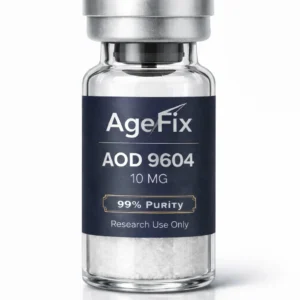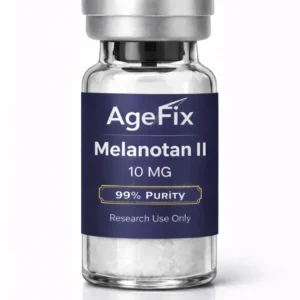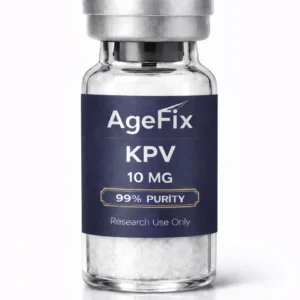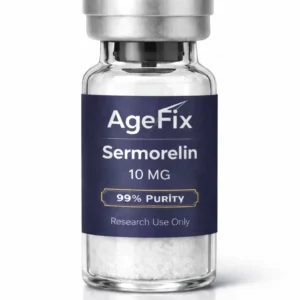
Ordering Update | Ordering has moved to representative consultation. Submit your selection and our representative Rob will follow up with pricing, availability, and next steps. Questions? rob@agefix.shop
$ 10 / 10ml
999 in stock (can be backordered)
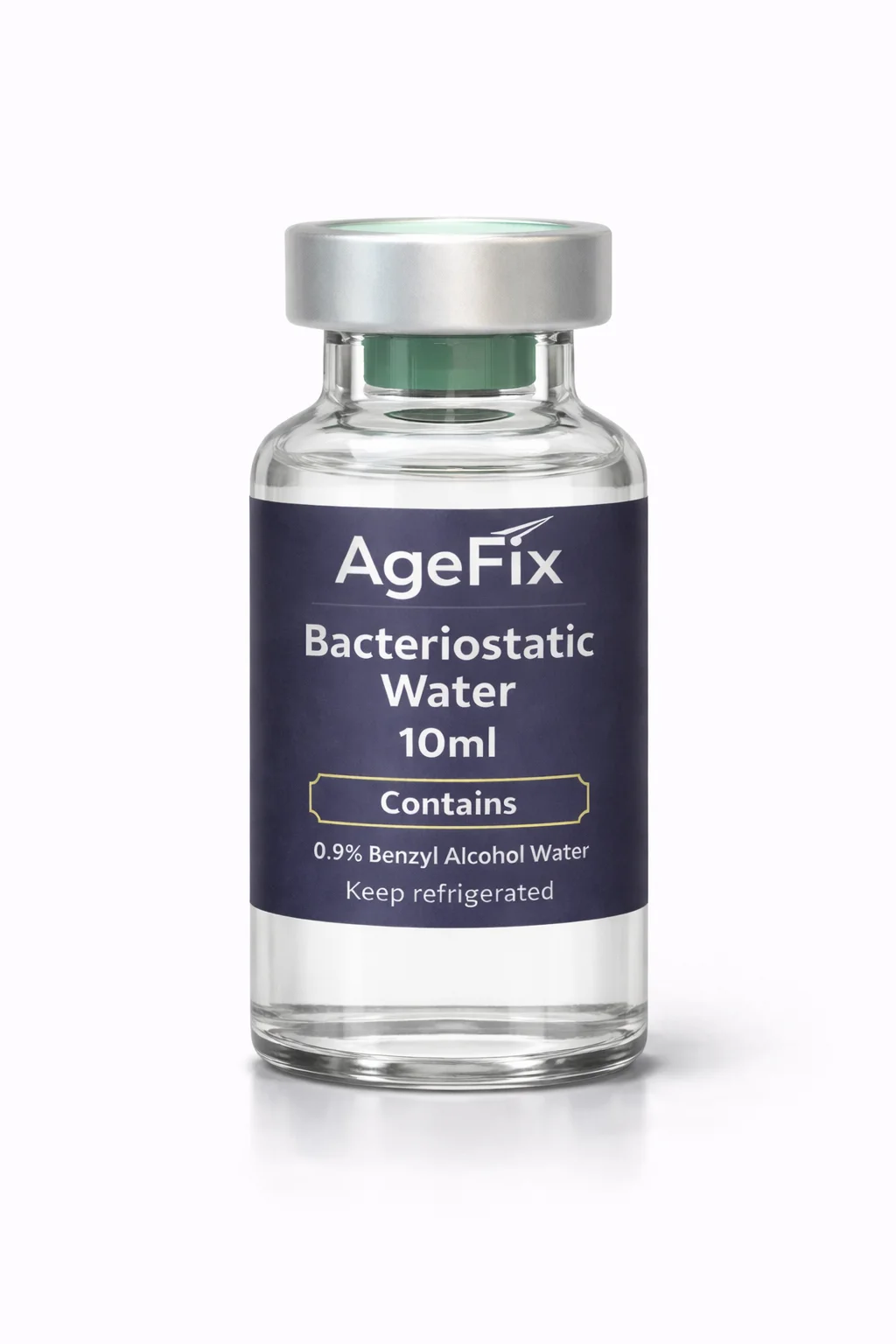
AgeFix Bacteriostatic Water is a sterile mixing solution formulated specifically for peptide reconstitution in laboratory research settings. Each vial contains USP-grade water preserved with 0.9% benzyl alcohol, which inhibits microbial growth and allows for multiple withdrawals from the same vial over a 28-day period — essential for researchers who need to reconstitute peptides across multiple experimental sessions.
Lyophilized (freeze-dried) peptides must be reconstituted in a sterile solvent before use in research protocols. Bacteriostatic water is preferred over sterile water for injection because the benzyl alcohol preservative allows the vial to be accessed multiple times without contamination risk. This is critical for peptides that are reconstituted once but administered in measured aliquots over days or weeks during extended research protocols.
This bacteriostatic water is compatible with all lyophilized peptides in the AgeFix catalog, including popular research compounds like BPC-157, TB-500, and CJC-1295 + Ipamorelin. For optimal reconstitution volumes and storage conditions, refer to each individual product page.
Each vial contains USP-grade bacteriostatic water with 0.9% benzyl alcohol preservative. Manufactured in the USA under sterile conditions. For laboratory research use only.
Bacteriostatic water has been a standard pharmaceutical preparation since the early 20th century, with benzyl alcohol recognized as an effective antimicrobial preservative in the United States Pharmacopeia (USP) since the 1940s. The 0.9% benzyl alcohol concentration was established through extensive microbiological testing to provide reliable bacteriostatic activity without interfering with the stability of dissolved compounds. Regulatory standards for bacteriostatic water are maintained by the USP and the U.S. Food and Drug Administration, which define specifications for sterility, endotoxin limits, and preservative concentration. Research published in the Journal of Pharmaceutical Sciences and other peer-reviewed publications has validated the 28-day multi-use window for benzyl alcohol-preserved water under proper refrigeration. Bacteriostatic water remains the recommended reconstitution solvent for lyophilized peptides in laboratory protocols worldwide, endorsed by standard operating procedures at major research institutions. All references pertain to laboratory and pharmaceutical research applications.
AgeFix Bacteriostatic Water is manufactured using USP-grade water with 0.9% benzyl alcohol preservative under sterile conditions in the USA. Each batch meets pharmacopeial standards for sterility and endotoxin limits, ensuring reliable results in peptide reconstitution for research protocols.
Peptides reconstituted with bacteriostatic water should be stored at 2–8°C and used within 28 days. The 0.9% benzyl alcohol preservative inhibits microbial growth, allowing multiple withdrawals from the same vial during that period without compromising sterility for research use.
Bacteriostatic water contains 0.9% benzyl alcohol, which prevents bacterial growth and allows the vial to be used for multiple withdrawals over 28 days. Sterile water for injection contains no preservative and must be discarded after a single use, making bacteriostatic water the preferred choice for multi-dose peptide research protocols.
We use cookies to enhance your browsing experience, provide personalized content, and improve site performance. For the best experience, please keep your browser up to date — latest browser update.