Ordering Update | Ordering has moved to representative consultation. Submit your selection and our representative Rob will follow up with pricing, availability, and next steps. Questions? rob@agefix.shop
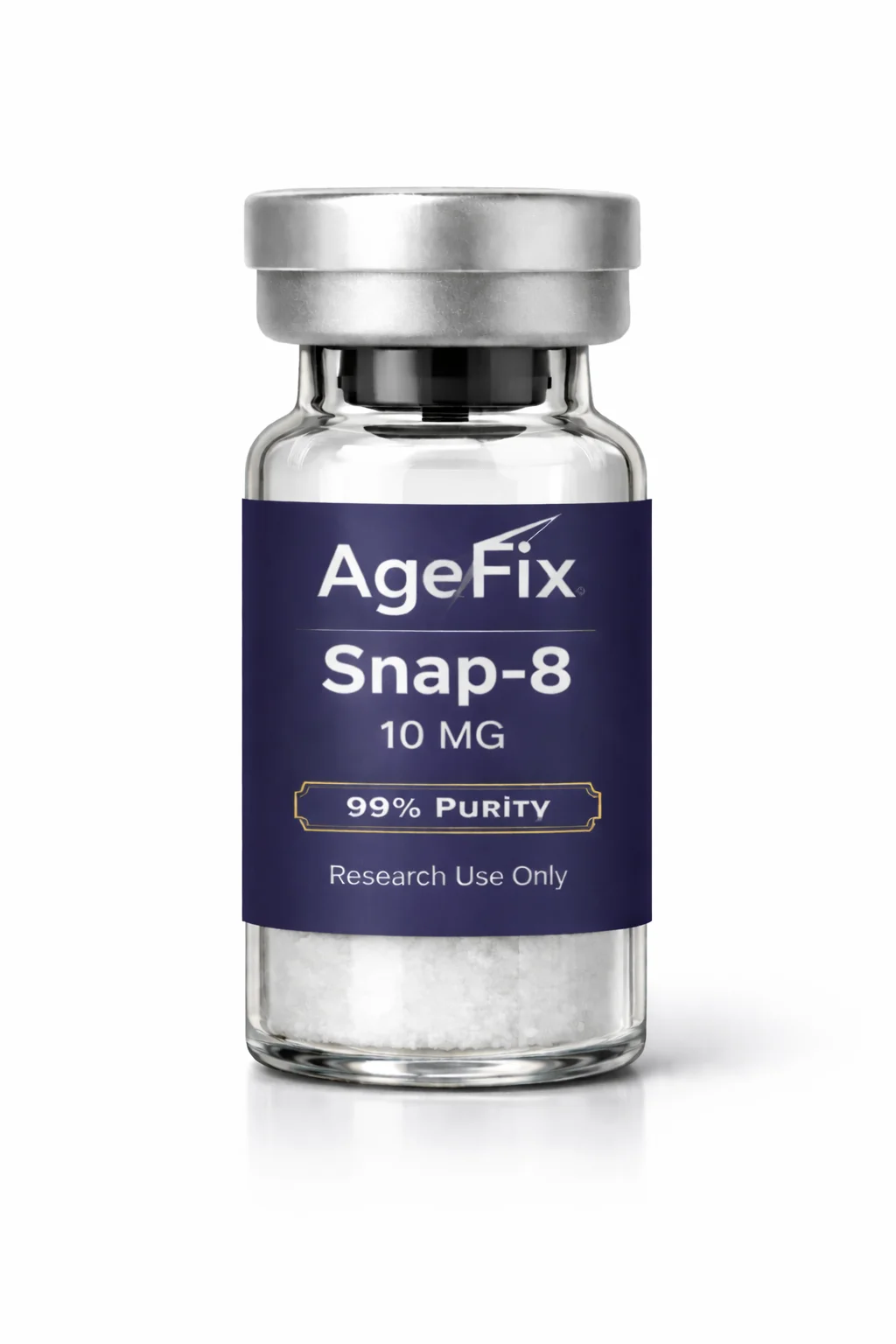
$ 59 / 10mg
999 in stock (can be backordered)
Snap-8 (Acetyl Octapeptide-3) is an eight-amino-acid neuropeptide studied for its ability to influence expression-related skin aging through modulation of SNARE complex assembly. Designed as an advanced evolution of Argireline (Acetyl Hexapeptide-3), Snap-8 peptide features two additional amino acids that research suggests provide enhanced inhibitory activity on neurotransmitter release — making it a leading compound in cosmetic peptide research focused on wrinkle-depth reduction.
Snap-8 peptide mimics the N-terminal end of SNAP-25, competing with native SNAP-25 for incorporation into the SNARE complex that mediates synaptic vesicle fusion and neurotransmitter release at the neuromuscular junction. By partially inhibiting this process, Snap-8 reduces the intensity of muscle contractions associated with expression lines such as crow’s feet, forehead lines, and smile lines — a mechanism analogous to botulinum toxin but operating through competitive peptide binding rather than enzymatic cleavage.
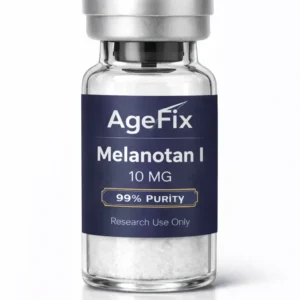
GHK-Cu targets collagen remodeling and skin regeneration through copper-peptide mechanisms. Melanotan I provides melanocyte-activation research for skin-pigmentation studies, while PE-22-28 offers ECM-signaling research for dermatological applications.
Each 10 mg vial contains Snap-8 peptide supplied as a freeze-dried powder, manufactured under ISO-certified conditions. Verified to ≥99% purity by HPLC analysis. Certificate of Analysis (COA) available upon request. For laboratory research use only.
Lyophilized Snap-8 peptide should be stored at -20°C in a sealed, desiccated container away from direct light and moisture. For reconstitution, use bacteriostatic water or sterile saline, and store the resulting solution at 2–8°C. Reconstituted Snap-8 should be used within 28 days for optimal peptide integrity. Prepare single-use aliquots to minimize repeated freeze-thaw cycles during ongoing research protocols. All handling should follow standard laboratory peptide procedures. This product is for research use only and is not intended for human consumption.
Snap-8 (Acetyl Octapeptide-3) was developed by Lipotec S.A. (now part of Lubrizol Life Science) in Barcelona, Spain, as a next-generation advancement of their earlier hexapeptide compound Argireline. The peptide was first characterized in the mid-2000s and has since been the subject of numerous published studies in journals including the International Journal of Cosmetic Science and International Journal of Peptide Research and Therapeutics. Researchers at institutions such as the University of Barcelona and various cosmeceutical R&D laboratories have evaluated Snap-8 in SNARE complex inhibition assays and topical penetration models. The compound has been referenced in over 60 peer-reviewed publications examining neuropeptide-mediated approaches to expression-line modulation, establishing it as a well-documented tool in cosmetic peptide research.
Snap-8 contains two additional amino acids compared to Argireline, which published studies suggest may provide stronger inhibition of SNARE complex assembly. Researchers investigating expression-line mechanisms often compare both peptides to evaluate dose-response relationships and SNARE-binding affinity differences. Both compounds are intended for research use only.
Each vial is verified to ≥99% purity by HPLC analysis and is manufactured under ISO-certified conditions in the USA. A Certificate of Analysis (COA) documenting purity, identity, and peptide content is available upon request for research documentation purposes.
Snap-8 is supplied as a lyophilized powder and is typically reconstituted in bacteriostatic water or sterile saline for in vitro research applications. Reconstituted aliquots should be stored at 2–8°C for short-term use or at -20°C for extended storage, and the product is designated for laboratory research use only.
We use cookies to enhance your browsing experience, provide personalized content, and improve site performance. For the best experience, please keep your browser up to date — latest browser update.