Ordering Update | Ordering has moved to representative consultation. Submit your selection and our representative Rob will follow up with pricing, availability, and next steps. Questions? rob@agefix.shop
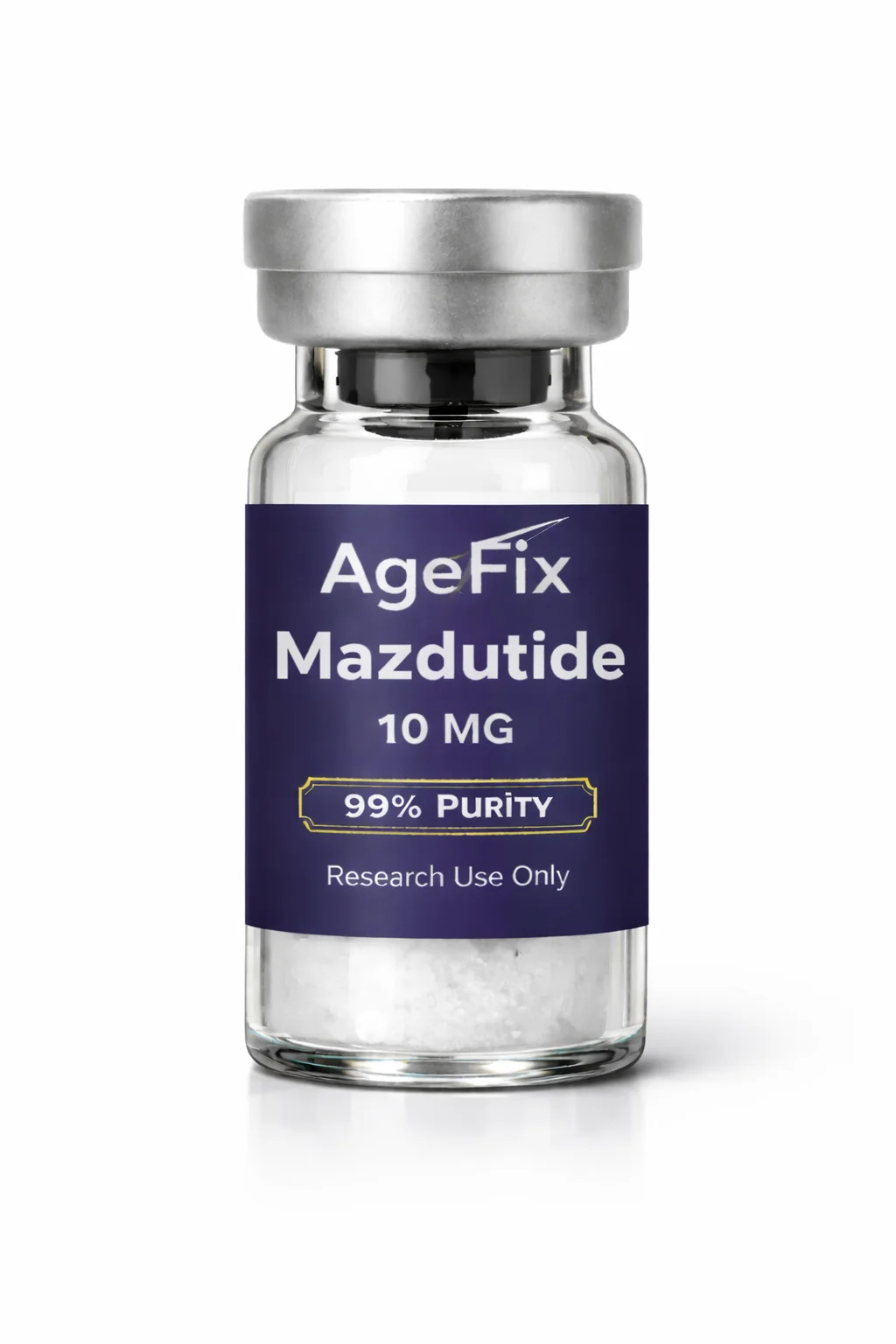
$ 159 / 10mg
999 in stock (can be backordered)
Mazdutide is an emerging dual-agonist research peptide that activates both GLP-1 and glucagon receptors, studied for its potential role in body-weight regulation, glucose metabolism, and hepatic lipid processing. Developed as a next-generation metabolic compound, Mazdutide peptide has generated significant research interest due to its dual-pathway mechanism — combining GLP-1-mediated appetite suppression with glucagon-driven energy expenditure.
Mazdutide peptide simultaneously activates GLP-1 receptors (promoting satiety, slowing gastric emptying, and enhancing insulin secretion) and glucagon receptors (stimulating hepatic glucose output, lipolysis, and thermogenesis). This dual activation creates a complementary metabolic effect — appetite reduction paired with increased energy expenditure — that has been studied in clinical trials for obesity and type 2 diabetes research.
Survodutide offers a similar dual GLP-1/glucagon mechanism for comparative studies, while Retatrutide adds GIP-receptor activation for triple-agonist research. Cagrilintide targets the amylin pathway for a distinct approach to appetite and metabolic signaling.
Each vial contains Mazdutide peptide manufactured in the USA under ISO-certified conditions. Verified to ≥99% purity by HPLC analysis, with endotoxin screening below 0.1 EU/mg. Certificate of Analysis (COA) available upon request. For laboratory research use only.
Lyophilized Mazdutide peptide should be stored at -20°C immediately upon receipt to preserve its dual-agonist activity and structural integrity. Keep vials sealed and protected from light, heat, and moisture. For reconstitution, use bacteriostatic water (0.9% benzyl alcohol) and allow the lyophilized powder to dissolve without vigorous shaking. Once reconstituted, store the peptide solution at 2–8°C and use within 28 days to maintain consistent bioactivity. Avoid repeated freeze-thaw cycles, as these can degrade the peptide backbone and diminish receptor-binding potency. Follow standard aseptic handling procedures in all laboratory settings. For research use only.
Mazdutide (also known as IBI362 or LY3305677) was developed by Eli Lilly in collaboration with Innovent Biologics as a next-generation dual-receptor agonist for metabolic research. The compound emerged from incretin-based drug discovery programs that sought to combine GLP-1 and glucagon receptor activation into a single molecule for enhanced metabolic effects. Since its initial disclosure, Mazdutide has been the subject of multiple Phase II and Phase III clinical studies conducted across research centers in China and internationally, with results published in journals including The Lancet Diabetes & Endocrinology. The compound represents a growing class of multi-agonist peptides being investigated for their combined effects on appetite suppression, energy expenditure, and hepatic lipid metabolism in preclinical and clinical research models. All references pertain to laboratory and clinical research contexts only.
Dual agonism allows researchers to study the combined effects of GLP-1-mediated appetite suppression and insulin sensitization alongside glucagon-driven lipolysis and thermogenesis. This complementary mechanism addresses both energy intake and expenditure simultaneously, offering a more comprehensive metabolic research model than single-receptor agonists. This product is supplied for laboratory research use only.
Mazdutide is manufactured in the USA under ISO-certified conditions and verified to ≥99% purity by HPLC analysis, with endotoxin screening confirmed below 0.1 EU/mg. A comprehensive Certificate of Analysis (COA) is available upon request for research documentation and regulatory compliance purposes.
Mazdutide activates two receptor pathways (GLP-1 and glucagon), while Retatrutide adds a third target (GIP receptors) for triple-agonist activity. Researchers use both compounds in comparative pharmacology studies to evaluate the incremental contribution of each receptor pathway to overall metabolic outcomes. Both products are intended for research use only.
We use cookies to enhance your browsing experience, provide personalized content, and improve site performance. For the best experience, please keep your browser up to date — latest browser update.