$ 75 / 10mg
999 in stock (can be backordered)
AOD9604 is a 15-amino-acid synthetic fragment derived from the C-terminus of human growth hormone (hGH 176-191). It was specifically designed to target fat-metabolism pathways without activating the broader growth-hormone receptor, making it a valuable tool in obesity and metabolic research. AOD9604 peptide has been studied in preclinical models for its effects on lipolysis, lipogenesis inhibition, and body-composition regulation.
Unlike full-length hGH, AOD9604 peptide does not affect IGF-1 levels or insulin sensitivity in research models. Instead, it appears to stimulate lipolysis (fat breakdown) and inhibit lipogenesis (fat formation) through a mechanism that mimics the fat-reducing region of natural growth hormone. This selectivity makes it particularly useful in studies examining targeted fat reduction without broader endocrine disruption.
AOD9604 is frequently studied alongside other metabolic research peptides. 5-Amino-1MQ targets NNMT-mediated fat metabolism through a complementary mechanism, while Retatrutide and Cagrilintide offer GLP-based approaches to metabolic regulation.
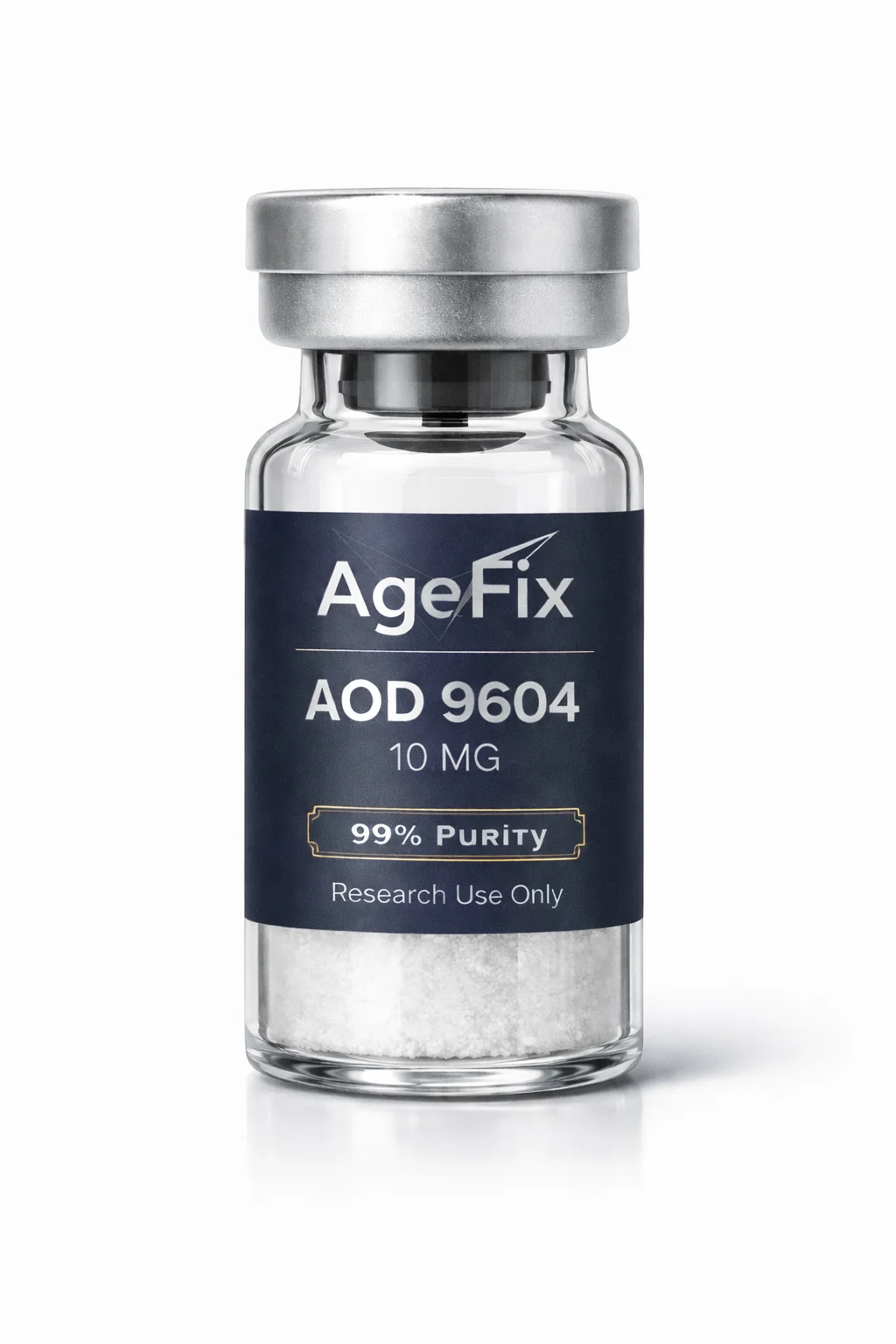
Each vial contains AOD9604 peptide manufactured in the USA under ISO-certified conditions. Verified to ≥99% purity by HPLC analysis, with endotoxin screening below 0.1 EU/mg. Certificate of Analysis (COA) available upon request. For laboratory research use only.
Lyophilized AOD9604 peptide should be stored at -20°C upon receipt to preserve its lipolytic activity and structural integrity. Keep vials sealed and protected from light, heat, and moisture during storage. For reconstitution, use bacteriostatic water (0.9% benzyl alcohol), allowing the lyophilized powder to dissolve gently without vigorous shaking or vortexing. Once reconstituted, store the peptide solution at 2–8°C and use within 28 days for consistent experimental results. Avoid repeated freeze-thaw cycles, as this can degrade the 15-amino-acid fragment structure and diminish biological activity. Handle under standard aseptic laboratory conditions. For research use only.
AOD9604 was originally developed in the late 1990s by researchers at Monash University in Melbourne, Australia, led by Professor Frank Ng. The compound was designed by isolating amino acids 176–191 from the C-terminus of human growth hormone — the specific region responsible for the lipolytic properties of hGH — and stabilizing it with a tyrosine residue. Early preclinical work published in Obesity Research and the Journal of Endocrinology demonstrated that AOD9604 could stimulate lipolysis and inhibit lipogenesis without affecting IGF-1 levels or glucose metabolism. The compound was subsequently licensed to Metabolic Pharmaceuticals and advanced through clinical evaluation. AOD9604 has been referenced in over 60 peer-reviewed publications and remains widely used in GH-fragment pharmacology and adipose-tissue metabolism research. Key contributing institutions include Monash University, the University of Melbourne, and the Garvan Institute of Medical Research. All citations pertain to preclinical and laboratory research only.
AOD9604 is derived from the C-terminal fragment (amino acids 176-191) of human growth hormone, which contains the fat-metabolizing region but lacks the domains responsible for GH receptor activation, IGF-1 elevation, and insulin-sensitivity changes. This allows researchers to study lipolytic and anti-lipogenic effects in isolation from the broader endocrine actions of full-length growth hormone. This product is supplied for laboratory research use only.
AOD9604 is manufactured in the USA under ISO-certified conditions and verified to ≥99% purity by HPLC analysis, with endotoxin screening confirmed below 0.1 EU/mg. A comprehensive Certificate of Analysis (COA) is available upon request for research documentation and regulatory compliance purposes.
AOD9604 works through a GH-fragment mechanism that directly stimulates lipolysis and inhibits lipogenesis in adipose tissue, while 5-Amino-1MQ operates through NNMT enzyme inhibition to boost NAD+ levels and cellular energy metabolism. Researchers often study both compounds to compare receptor-mediated versus enzymatic approaches to fat-metabolism research. Both products are intended for research use only.
We use cookies to enhance your browsing experience, provide personalized content, and improve site performance. For the best experience, please keep your browser up to date — latest browser update.