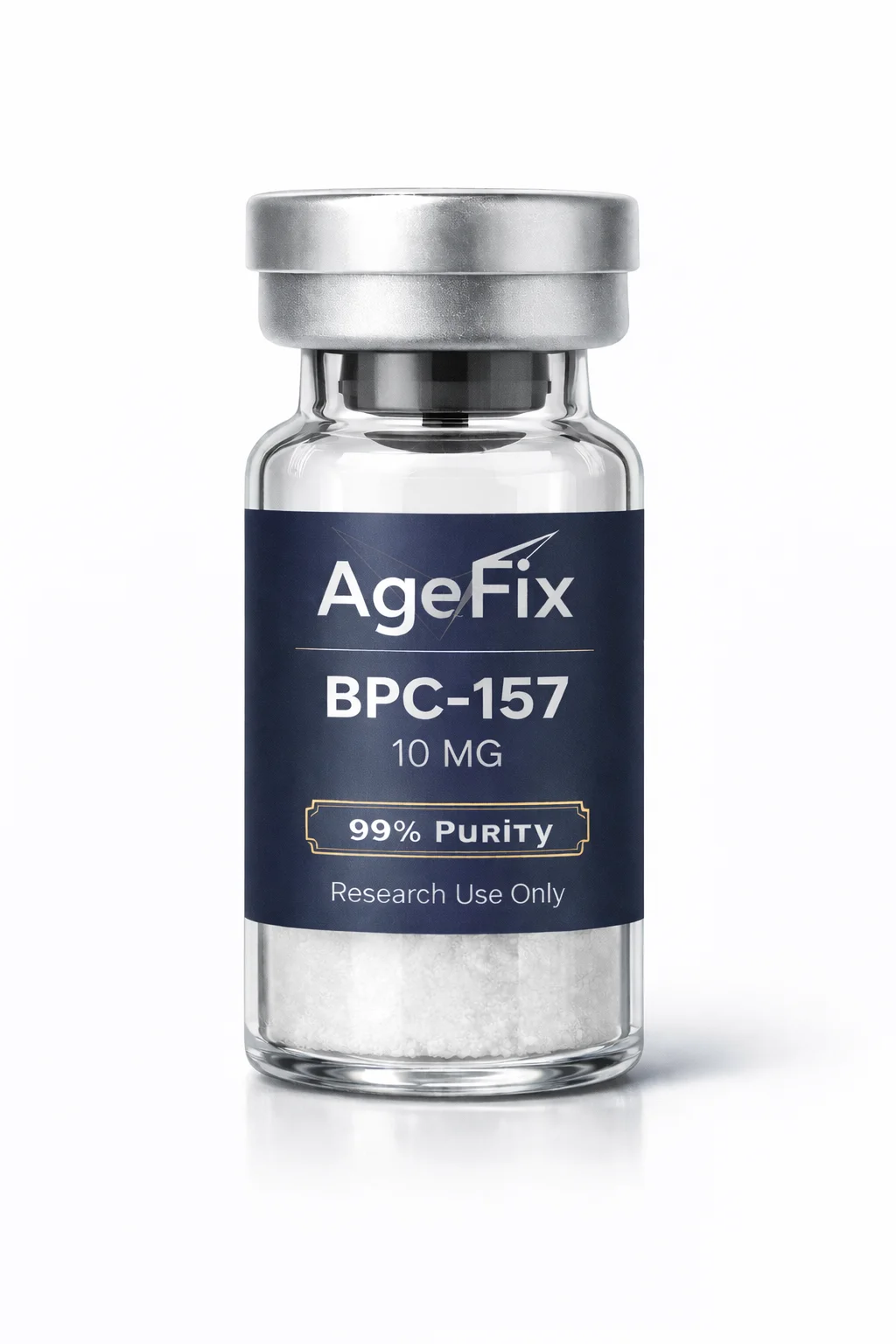
$ 50 / 10mg
999 in stock (can be backordered)
BPC-157 (Body Protection Compound-157) is a synthetic 15-amino-acid peptide derived from a naturally occurring gastric protein. It is one of the most widely studied peptides in preclinical research, with over 100 published studies examining its effects on tissue repair, angiogenesis, inflammation modulation, and gastrointestinal healing. BPC-157 peptide has demonstrated remarkable stability in acidic environments, making it uniquely suitable for oral-route research models.
BPC-157 peptide appears to exert its effects through multiple pathways, including upregulation of growth-factor expression (VEGF, EGF), modulation of the nitric oxide system, and interaction with the dopaminergic and GABAergic systems. In rodent models, it has been studied for accelerated tendon-to-bone healing, gut-lining restoration, and protection against NSAID-induced gastrointestinal damage.
BPC-157 is frequently studied alongside TB-500 (Thymosin Beta-4), which targets tissue repair through cell-migration and anti-inflammatory mechanisms. The BPC-157 + TB-500 combination — often called the “Wolverine Stack” — is a popular research pairing. For immune-related repair studies, KPV offers complementary anti-inflammatory signaling.
Each vial contains BPC-157 peptide manufactured in the USA under ISO-certified conditions. Verified to ≥99% purity by HPLC analysis, with endotoxin levels screened below 0.1 EU/mg. Certificate of Analysis (COA) available upon request. For laboratory research use only.
BPC-157 is supplied as a lyophilized (freeze-dried) powder for maximum long-term stability. Store unopened vials at -20°C in a dry environment, protected from light. When ready for use, reconstitute with bacteriostatic water using sterile technique. Once reconstituted, store the solution at 2–8°C (standard refrigerator temperature) and use within 28 days to ensure peptide integrity. Avoid repeated freeze-thaw cycles, as this can degrade peptide bonds and reduce biological activity. Handle all vials with appropriate laboratory PPE. For research use only.
BPC-157 was first identified and characterized in the early 1990s by researchers at the University of Zagreb, Croatia, led by Professor Predrag Sikiric. The peptide is a partial sequence of the human gastric juice protein BPC, isolated from gastric mucosal extracts. Since its discovery, BPC-157 has been the subject of more than 100 peer-reviewed preclinical studies published in journals including the Journal of Physiology – Paris, Life Sciences, and the Journal of Pharmacological Sciences. Research groups across Europe and North America have investigated its effects on tendon healing, gastrointestinal mucosal protection, and neurotransmitter system modulation. Its remarkable stability at low pH and resistance to enzymatic degradation have made it one of the most referenced peptides in tissue-repair literature. All studies cited are preclinical; this compound is sold for laboratory research use only.
Each vial of BPC-157 is verified to ≥99% purity via third-party HPLC analysis and screened for endotoxin levels below 0.1 EU/mg. It is manufactured in the USA under ISO-certified conditions, and a Certificate of Analysis (COA) is available upon request for research documentation purposes.
In preclinical rodent studies, BPC-157 has been investigated for its effects on tendon-to-bone healing, gut-barrier restoration, and NSAID-induced gastrointestinal damage. Its mechanisms appear to involve upregulation of VEGF and EGF growth factors, as well as modulation of nitric oxide signaling. This product is intended for laboratory research use only.
Yes, BPC-157 is frequently paired with TB-500 (Thymosin Beta-4) in preclinical research models studying multi-pathway tissue repair. The two peptides target complementary mechanisms — BPC-157 focuses on vascular and gut-related repair, while TB-500 supports cell migration and inflammation modulation. This combination is available as the BPC-157 + TB-500 “Wolverine Stack” for research use only.
We use cookies to enhance your browsing experience, provide personalized content, and improve site performance. For the best experience, please keep your browser up to date — latest browser update.