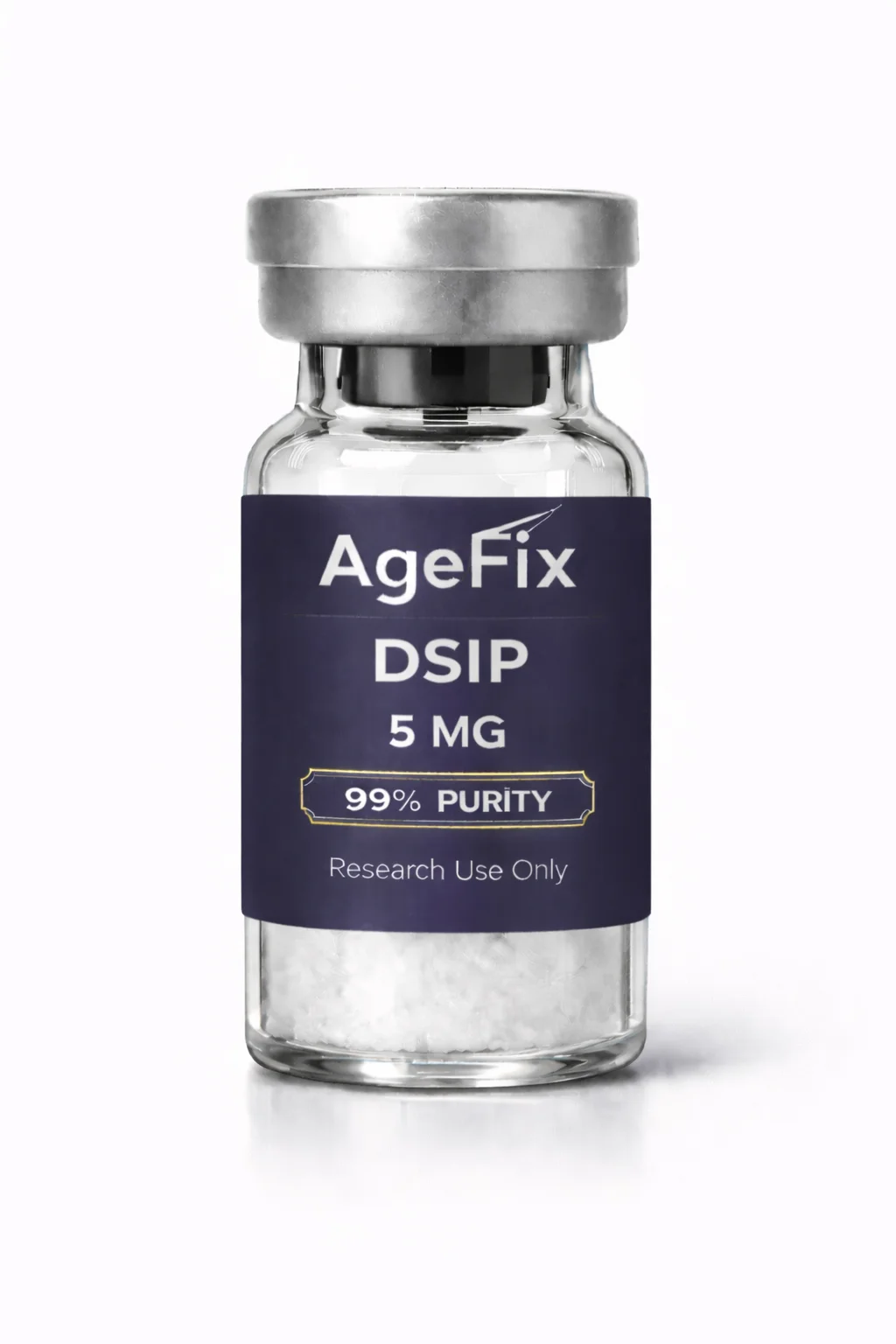
$ 49 / 5mg
999 in stock (can be backordered)
DSIP (Delta Sleep-Inducing Peptide) is a nine-amino-acid neuropeptide originally isolated from rabbit brain tissue and studied extensively for its role in sleep architecture, stress-hormone regulation, and neuroendocrine signaling. DSIP peptide has been explored in laboratory models for its effects on slow-wave sleep induction, ACTH/cortisol modulation, and neuroprotective pathways — making it a versatile tool in neuroscience research.
DSIP peptide appears to modulate multiple neuroendocrine pathways simultaneously. Research suggests it influences GABAergic and glutamatergic systems, reduces corticotropin-releasing hormone (CRH) signaling, and may interact with opioid receptor pathways. In rodent models, DSIP administration has been associated with increased delta-wave sleep activity and normalized stress-hormone profiles following acute stress exposure.
Researchers studying sleep and neuroendocrine pathways often explore DSIP alongside Epithalon, which targets telomerase activation and has been studied for its effects on circadian regulation. Selank and Semax offer complementary nootropic and anxiolytic research angles in neuroscience models.
Each vial contains DSIP peptide manufactured in the USA under ISO-certified conditions. Verified to ≥99% purity by HPLC analysis, with endotoxin screening below 0.1 EU/mg. Certificate of Analysis (COA) available upon request. For laboratory research use only.
DSIP is supplied as a lyophilized (freeze-dried) powder for maximum stability during storage and shipping. Store unopened vials at -20°C in a dry, light-protected environment. Reconstitute with bacteriostatic water using sterile aseptic technique prior to experimental use. After reconstitution, store the peptide solution at 2–8°C (standard laboratory refrigerator) and use within 28 days to maintain neuropeptide integrity and bioactivity. Avoid repeated freeze-thaw cycles, as thermal stress can degrade the nine-amino-acid sequence and reduce receptor-binding efficacy. Handle with standard laboratory PPE. For research use only.
DSIP was first isolated in 1977 by Swiss researchers Schoenenberger and Monnier from the cerebral venous blood of rabbits during induced sleep. The peptide’s nonapeptide sequence (Trp-Ala-Gly-Gly-Asp-Ala-Ser-Gly-Glu) was subsequently characterized and synthesized for laboratory use. Since its discovery, DSIP has been the subject of more than 80 peer-reviewed studies published in journals including Peptides, Neuroscience Letters, Brain Research, and the European Journal of Pharmacology. Research groups in Switzerland, Germany, Russia, and Japan have investigated its effects on sleep EEG patterns, HPA-axis modulation, and opioid-receptor interactions. The peptide’s broad neuroendocrine activity profile has sustained research interest for nearly five decades, making it one of the most well-characterized sleep-related neuropeptides in the scientific literature. This compound is sold for laboratory research use only.
Every batch of DSIP is verified to ≥99% purity by high-performance liquid chromatography (HPLC) and screened for endotoxin levels below 0.1 EU/mg. A Certificate of Analysis (COA) documenting identity, purity, and sterility results is available upon request for research documentation purposes.
DSIP has been investigated in laboratory models for its effects on GABAergic and glutamatergic systems, corticotropin-releasing hormone (CRH) signaling, and opioid receptor interactions. Preclinical studies have associated DSIP administration with increased delta-wave sleep activity and normalized ACTH/cortisol profiles following stress exposure in rodent models.
Yes, DSIP is frequently studied alongside complementary compounds such as Epithalon for circadian regulation research, and Selank or Semax for broader neuroendocrine and nootropic pathway studies. All compounds are sold for laboratory research use only and are not intended for human consumption.
We use cookies to enhance your browsing experience, provide personalized content, and improve site performance. For the best experience, please keep your browser up to date — latest browser update.