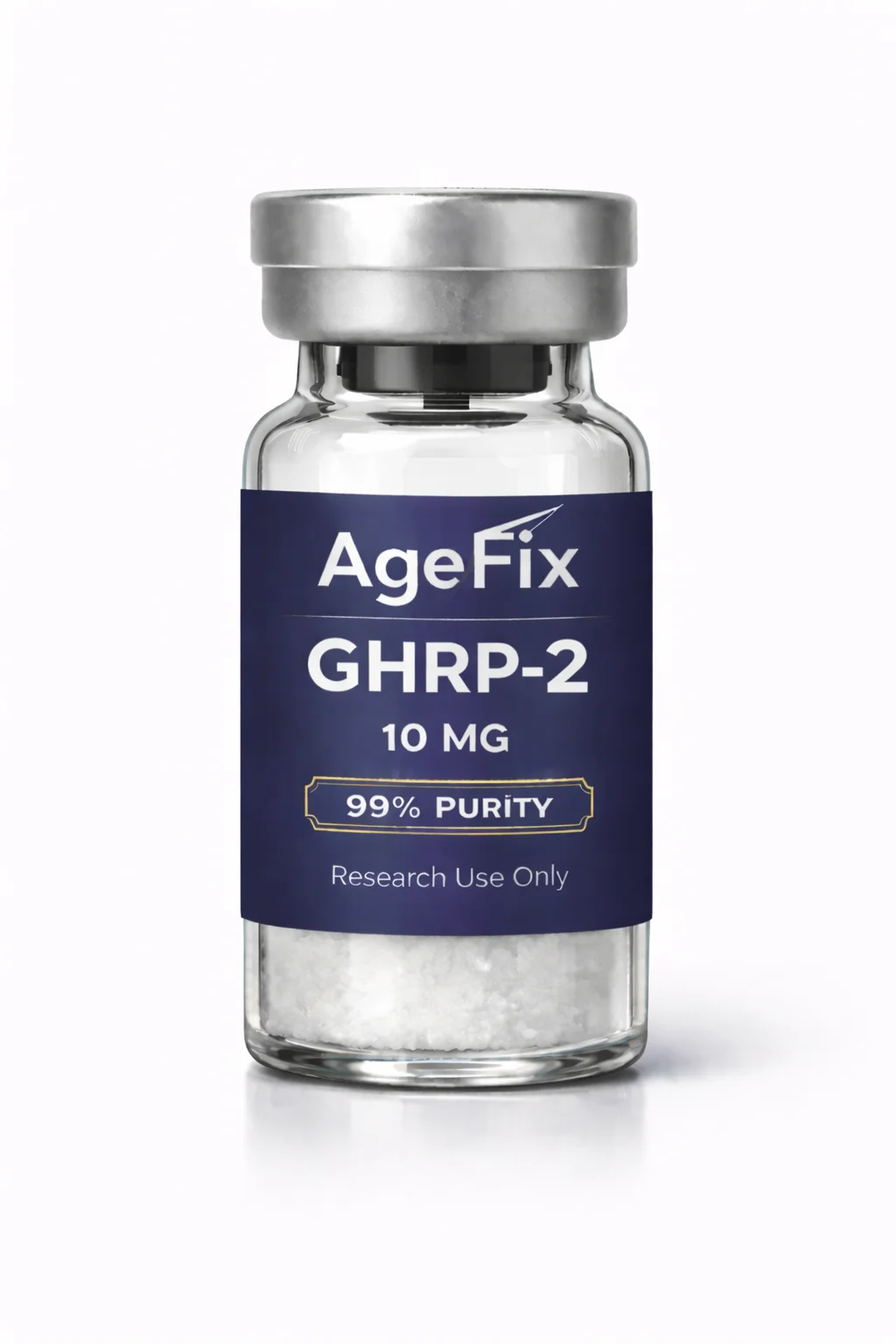
$ 49 / 10mg
999 in stock (can be backordered)
GHRP-2 (Growth Hormone Releasing Peptide-2) is a synthetic hexapeptide that targets the ghrelin receptor (GHS-R1a) to stimulate pulsatile growth-hormone release from the anterior pituitary. It is one of the most potent GH secretagogues studied in preclinical research, producing robust and dose-dependent GH elevation in both in vitro and in vivo models. GHRP-2 peptide is widely used in endocrinology research examining GH-axis dynamics, appetite signaling, and metabolic regulation.
GHRP-2 peptide binds to GHS-R1a receptors, triggering intracellular calcium release and subsequent GH secretion. Unlike GHRH analogues that work through a separate receptor pathway, GHRP-2 also modestly stimulates ACTH and cortisol release — a pharmacological characteristic that distinguishes it from more selective secretagogues. In comparative studies, it has been shown to produce stronger GH pulses than GHRP-6, with less appetite stimulation.
GHRP-2 is commonly studied alongside Ipamorelin, a more selective GHS-R1a agonist with minimal cortisol effects, and Hexarelin, which offers the strongest GH-release potency in the GHRP family. Pairing with CJC-1295 (No DAC) enables dual GHRH + GHRP pathway research.
Each vial contains GHRP-2 peptide manufactured in the USA under ISO-certified conditions. Verified to ≥99% purity by HPLC analysis, with endotoxin screening below 0.1 EU/mg. Certificate of Analysis (COA) available upon request. For laboratory research use only.
Lyophilized GHRP-2 peptide should be stored at -20°C in a sealed container protected from light and moisture to maintain long-term stability. For reconstitution, use bacteriostatic water and gently swirl the vial until the powder is fully dissolved — never shake, as this may degrade the peptide. Once reconstituted, store at 2–8°C (standard laboratory refrigeration) and use within 28 days. Aliquoting into single-use volumes is recommended for researchers conducting multiple experiments to minimize freeze-thaw cycles. Always use sterile technique when withdrawing from reconstituted vials. For research use only.
GHRP-2 was first synthesized in the early 1990s by Cyril Bowers and colleagues at Tulane University as part of systematic structure-activity studies on growth hormone-releasing peptides. It emerged from iterative modifications of Met-enkephalin derivatives, with researchers optimizing for GH-releasing potency through the ghrelin receptor pathway. Since its initial characterization, GHRP-2 has appeared in over 300 peer-reviewed publications indexed in PubMed, spanning endocrinology, pharmacology, and neuroendocrine research. Key institutions contributing to GHRP-2 literature include Tulane University, the Karolinska Institute, and the University of Virginia. Research groups have used GHRP-2 as a diagnostic tool for evaluating pituitary GH reserve, and it remains a reference compound in comparative secretagogue pharmacology studies. All research cited is from preclinical and laboratory settings.
GHRP-2 is a synthetic hexapeptide that stimulates growth-hormone release by binding the ghrelin receptor (GHS-R1a). It produces stronger GH pulses than GHRP-6 with less appetite stimulation, and has a modest cortisol-stimulating effect that distinguishes it from more selective options like Ipamorelin.
GHRP-2 peptide is used in preclinical studies examining GH-axis dynamics, pituitary function, appetite signaling, and comparative secretagogue pharmacology. It is frequently paired with GHRH analogues like CJC-1295 for dual-pathway GH research.
Each vial is manufactured in the USA under ISO-certified conditions, verified to ≥99% purity by HPLC analysis, with endotoxin levels screened below 0.1 EU/mg. A Certificate of Analysis (COA) is available upon request. For laboratory and research use only.
We use cookies to enhance your browsing experience, provide personalized content, and improve site performance. For the best experience, please keep your browser up to date — latest browser update.