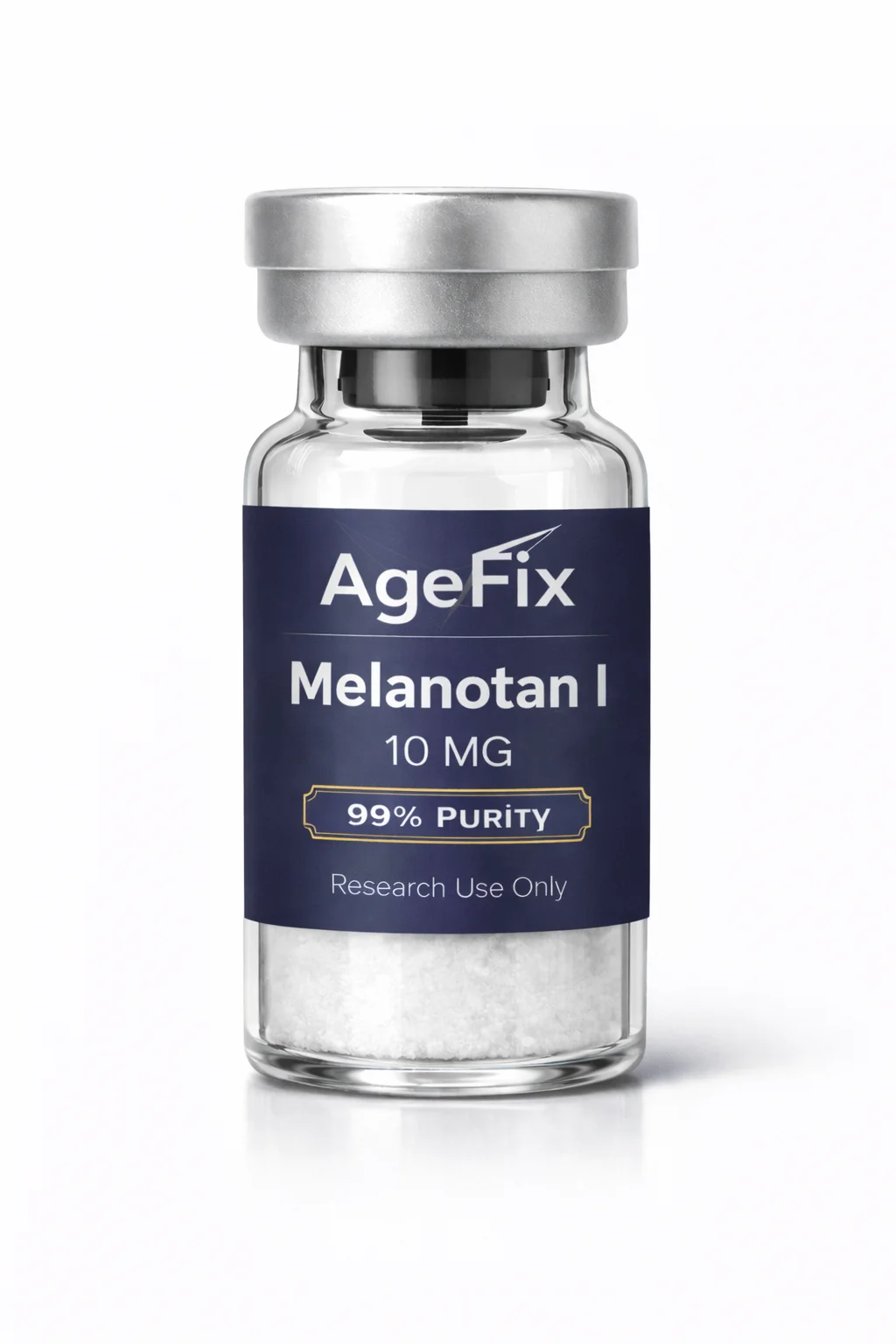
$ 39 / 10mg
999 in stock (can be backordered)
Melanotan I (Afamelanotide) is a 13-amino-acid linear analogue of alpha-melanocyte-stimulating hormone (α-MSH) studied for its ability to stimulate melanin production in melanocyte cultures and preclinical models. As a selective MC1R agonist, Melanotan I peptide activates melanogenesis — the biological process of melanin synthesis — making it a primary research tool in dermatology, photoprotection, and pigmentation biology.
Melanotan I peptide binds to melanocortin-1 receptors (MC1R) on melanocytes, activating adenylate cyclase and increasing intracellular cAMP levels. This triggers the MITF transcription factor cascade, upregulating tyrosinase and other melanogenic enzymes. The result is increased eumelanin production — the dark, photoprotective form of melanin. Unlike Melanotan II, Melanotan I has high MC1R selectivity with minimal cross-reactivity at MC3R, MC4R, and MC5R.
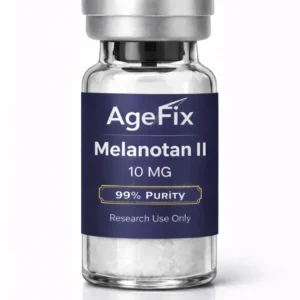
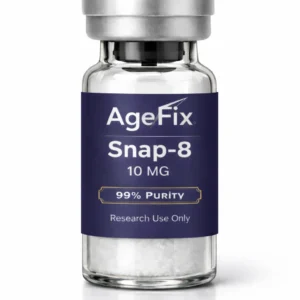
Melanotan II offers broader melanocortin-receptor activation for comparison studies. GHK-Cu provides a complementary skin-biology angle through collagen remodeling and copper-peptide signaling. Snap-8 targets expression-line research in cosmetic dermatology.
Each vial contains Melanotan I peptide manufactured in the USA under ISO-certified conditions. Verified to ≥99% purity by HPLC analysis, with endotoxin screening below 0.1 EU/mg. Certificate of Analysis (COA) available upon request. For laboratory research use only.
Lyophilized Melanotan I peptide should be stored at -20°C upon receipt to maintain full biological activity and chemical stability. Keep vials sealed and protected from light and moisture. When ready for use, reconstitute with bacteriostatic water (0.9% benzyl alcohol), allowing the powder to dissolve gently without vigorous agitation. Reconstituted Melanotan I should be stored at 2–8°C and used within 28 days to ensure consistent peptide integrity. Avoid repeated freeze-thaw cycles, as thermal cycling can compromise the linear peptide structure and reduce MC1R binding efficacy. Handle under standard aseptic laboratory conditions. For research use only.
Melanotan I was developed in the early 1980s at the University of Arizona by Dr. Victor Hruby and colleagues as part of a program to create potent, stable analogues of α-MSH for melanogenesis research. Originally designated as [Nle4, D-Phe7]-α-MSH, it became one of the first synthetic melanocortin peptides to advance into formal preclinical evaluation. The compound has been referenced in over 250 peer-reviewed publications exploring melanocyte biology, UV-response pathways, and photoprotection mechanisms. Melanotan I later received the international nonproprietary name Afamelanotide and was studied extensively by institutions including the University of Arizona, the Wellcome Trust Centre, and various European dermatology research groups. It remains a foundational reference compound in melanocortin receptor pharmacology. All citations pertain to laboratory and preclinical research only.
Melanotan I is a 13-amino-acid linear analogue of α-MSH with high selectivity for MC1R and minimal cross-reactivity at MC3R, MC4R, and MC5R. This selectivity allows researchers to isolate melanogenesis-specific effects without confounding signals from appetite, sexual-function, or energy-homeostasis pathways activated by broader agonists like Melanotan II. This product is supplied for laboratory research use only.
Each vial is manufactured in the USA under ISO-certified conditions and verified to ≥99% purity by HPLC analysis, with endotoxin screening confirmed below 0.1 EU/mg. A Certificate of Analysis (COA) documenting purity, identity, and endotoxin levels is available upon request for research compliance records.
Upon binding MC1R, Melanotan I activates adenylate cyclase, increasing intracellular cAMP which in turn activates the MITF transcription factor — the master regulator of melanogenic gene expression including tyrosinase. This cascade drives eumelanin production, the dark photoprotective pigment studied in UV-response and pigmentation research. This compound is designated for research use only.
We use cookies to enhance your browsing experience, provide personalized content, and improve site performance. For the best experience, please keep your browser up to date — latest browser update.