$ 69 / 10mg
999 in stock (can be backordered)
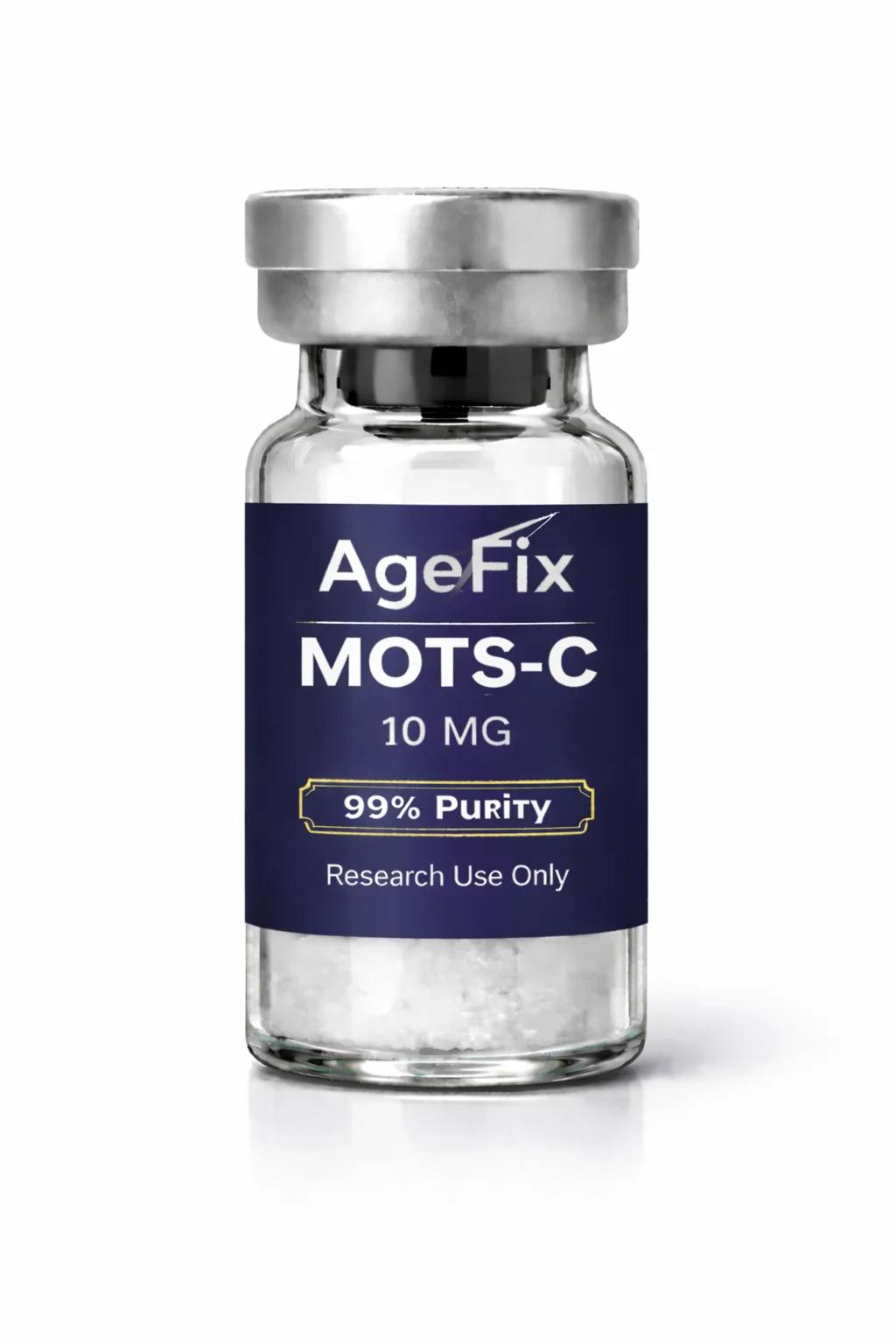
MOTS-C (Mitochondrial Open Reading Frame of the 12S rRNA Type-C) is a 16-amino-acid peptide encoded within the mitochondrial genome — one of only a few known mitochondrial-derived peptides (MDPs) with systemic signaling functions. MOTS-C peptide has emerged as a major research tool for studying exercise mimetics, insulin sensitivity, and cellular energy regulation, with published studies demonstrating its activation of AMPK and its effects on glucose uptake in skeletal muscle models.
MOTS-C peptide activates AMP-activated protein kinase (AMPK), the cell’s master energy sensor, through inhibition of the folate-methionine cycle and subsequent accumulation of AICAR — an endogenous AMPK activator. This mechanism is particularly notable because it recapitulates key metabolic effects of physical exercise at the molecular level, including enhanced glucose uptake, improved fatty-acid oxidation, and mitochondrial biogenesis.
Researchers studying mitochondrial function and metabolism often explore MOTS-C alongside SS-31 (Elamipretide), which targets the inner mitochondrial membrane directly, and 5-Amino-1MQ, which inhibits NNMT to boost NAD+ levels. NAD+ itself provides a direct coenzyme-supplementation approach to mitochondrial research.
Each vial contains MOTS-C peptide manufactured in the USA under ISO-certified conditions. Verified to ≥99% purity by HPLC analysis, with endotoxin screening below 0.1 EU/mg. Certificate of Analysis (COA) available upon request. For laboratory research use only.
Lyophilized MOTS-C peptide should be stored at -20°C in a sealed container protected from light and moisture for optimal long-term stability. Reconstitute with bacteriostatic water and store the resulting solution at 2–8°C, using all reconstituted material within 28 days. Prepare single-use aliquots at the time of reconstitution to minimize degradation from repeated freeze-thaw cycles. All handling should follow standard aseptic laboratory procedures for peptide research. This product is for laboratory research use only and is not intended for human consumption.
MOTS-C was discovered in 2015 by Dr. Changhan David Lee and colleagues at the University of Southern California (USC) Leonard Davis School of Gerontology. It was identified as a mitochondrial-derived peptide encoded within the 12S rRNA gene of mitochondrial DNA, making it one of only a few known bioactive peptides originating from the mitochondrial genome rather than nuclear DNA. The landmark discovery paper was published in Cell Metabolism and demonstrated MOTS-C’s ability to activate AMPK and regulate glucose homeostasis. Since then, the compound has been the subject of over 100 peer-reviewed publications in journals including Cell Metabolism, Nature Communications, and Aging Cell. Research groups at USC, the Buck Institute for Research on Aging, and the National Institute on Aging have extensively characterized its exercise-mimetic and insulin-sensitizing properties. MOTS-C remains a foundational research tool in the emerging field of mitochondrial-derived peptide biology.
MOTS-C is one of only a handful of known peptides encoded directly within the mitochondrial genome rather than nuclear DNA, classifying it as a mitochondrial-derived peptide (MDP). It functions as a systemic signaling molecule that activates AMPK and influences whole-body energy metabolism, mimicking key molecular effects of physical exercise. This product is supplied for laboratory research use only.
MOTS-C is manufactured in the USA under ISO-certified conditions and verified to ≥99% purity by HPLC analysis, with endotoxin levels confirmed below 0.1 EU/mg. A comprehensive Certificate of Analysis (COA) is available upon request for research documentation and regulatory compliance.
MOTS-C inhibits the folate-methionine cycle, leading to accumulation of AICAR, an endogenous intermediate that directly activates AMPK — the cell’s master energy sensor. This AMPK activation drives downstream effects including enhanced glucose uptake, fatty-acid oxidation, and mitochondrial biogenesis in preclinical models. This compound is designated for research use only.
We use cookies to enhance your browsing experience, provide personalized content, and improve site performance. For the best experience, please keep your browser up to date — latest browser update.