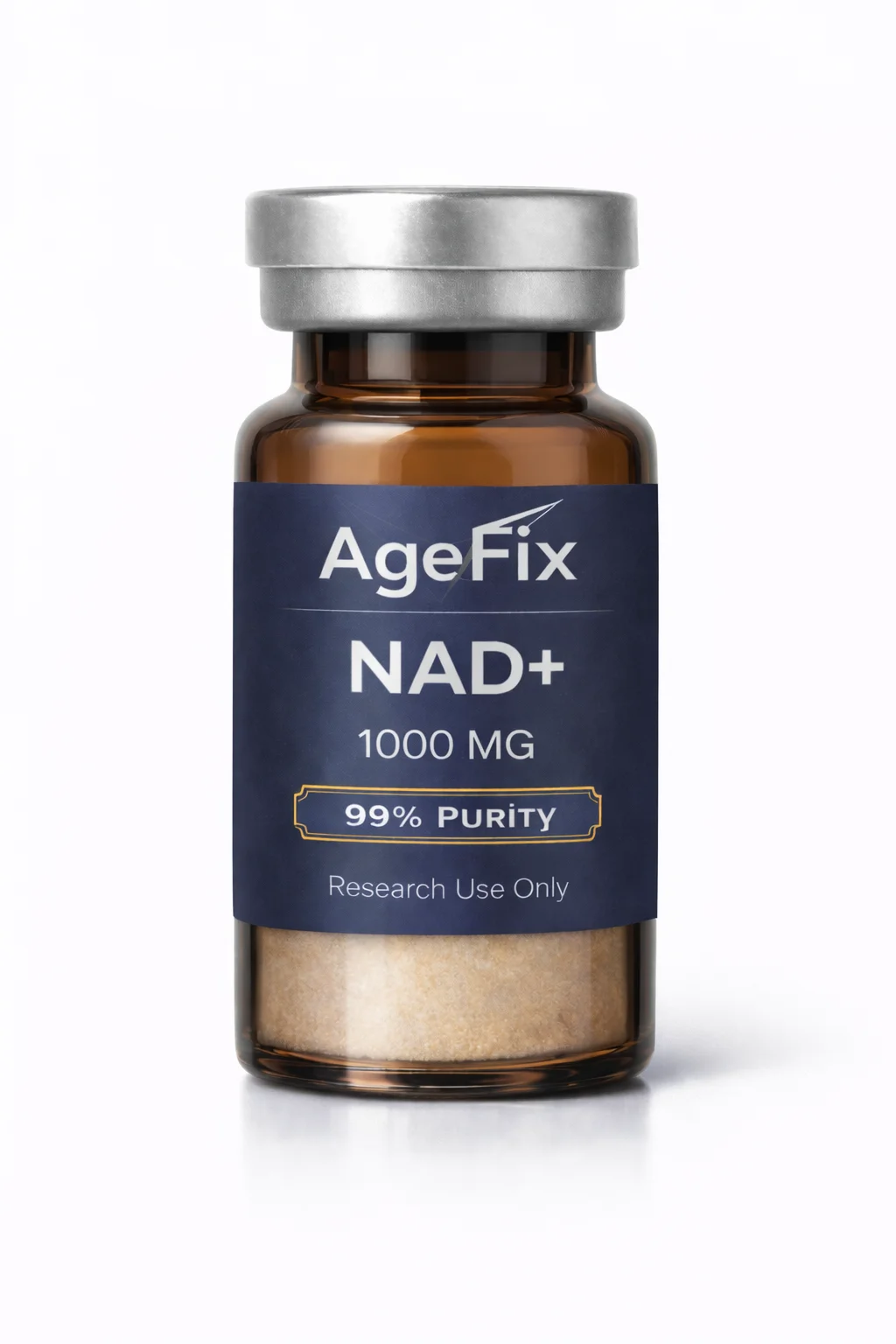
$ 199 / 1000mg
999 in stock (can be backordered)
NAD+ (Nicotinamide Adenine Dinucleotide) is a fundamental coenzyme present in every living cell, serving as a critical electron carrier in mitochondrial energy production and a required substrate for key regulatory enzymes including sirtuins (SIRT1-7) and poly(ADP-ribose) polymerases (PARPs). NAD+ research has exploded in recent years due to its central role in aging biology, with declining NAD+ levels linked to age-related metabolic dysfunction, neurodegeneration, and impaired DNA repair.
NAD+ participates in over 500 enzymatic reactions. As a coenzyme in the electron transport chain, it drives oxidative phosphorylation and ATP production. As a substrate for sirtuins, it activates deacetylase pathways that regulate gene expression, circadian rhythm, inflammation, and mitochondrial biogenesis. As a PARP substrate, it supports DNA-damage repair — a function that competes with sirtuin activity for available NAD+, creating a research-critical metabolic tension in aging models.
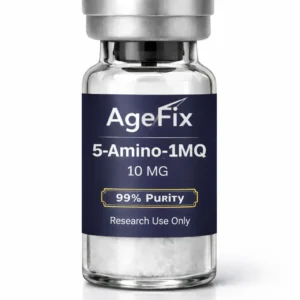
5-Amino-1MQ boosts NAD+ through NNMT inhibition, providing a complementary pathway approach. Epithalon targets telomerase activation for a different angle on cellular aging, while SS-31 directly stabilizes mitochondrial membrane function.
Each vial contains NAD+ manufactured in the USA under ISO-certified conditions. Verified for purity by HPLC analysis. Certificate of Analysis (COA) available upon request. For laboratory research use only.
Lyophilized NAD+ should be stored at -20°C in a sealed container protected from light and moisture, as NAD+ is hygroscopic and sensitive to photodegradation. For reconstitution, use bacteriostatic water and gently swirl until fully dissolved — never shake. Once reconstituted, store at 2–8°C (standard laboratory refrigeration) and use within 28 days. NAD+ solutions are particularly sensitive to pH and temperature fluctuations, so researchers should prepare aliquots to avoid repeated freeze-thaw cycles that can accelerate hydrolytic degradation. Always use sterile technique when withdrawing from reconstituted vials. For research use only.
NAD+ was first discovered in 1906 by Arthur Harden and William John Young during studies of fermentation at the Lister Institute in London, making it one of the oldest known coenzymes in biochemistry. Its complete chemical structure was determined by Hans von Euler-Chelpin in the 1930s, work that contributed to his Nobel Prize in Chemistry. Modern NAD+ research experienced a major resurgence after David Sinclair’s laboratory at Harvard Medical School published landmark studies on sirtuin-dependent NAD+ biology in the early 2000s. Today, over 20,000 publications referencing NAD+ are indexed in PubMed, spanning fields from mitochondrial bioenergetics to epigenetics and gerontology. Major research programs at Harvard, the University of New South Wales, and Washington University in St. Louis continue to advance understanding of NAD+ metabolism in aging models. All referenced work pertains to laboratory and preclinical research settings.
AgeFix NAD+ is verified for purity by HPLC analysis and manufactured in the USA under ISO-certified conditions. A Certificate of Analysis (COA) is available upon request so researchers can confirm batch-specific quality data for their protocols.
NAD+ levels naturally decline with age, and this depletion has been linked to reduced sirtuin activity, impaired DNA repair, and decreased mitochondrial function in research models. Studying exogenous NAD+ supplementation in laboratory settings helps researchers investigate whether restoring NAD+ levels can reverse these age-associated molecular changes.
Lyophilized NAD+ should be stored at -20°C and protected from light and moisture to maintain stability. Once reconstituted, it should be refrigerated at 2–8°C and used promptly. This product is sold for laboratory research use only and is not intended for human consumption.
We use cookies to enhance your browsing experience, provide personalized content, and improve site performance. For the best experience, please keep your browser up to date — latest browser update.