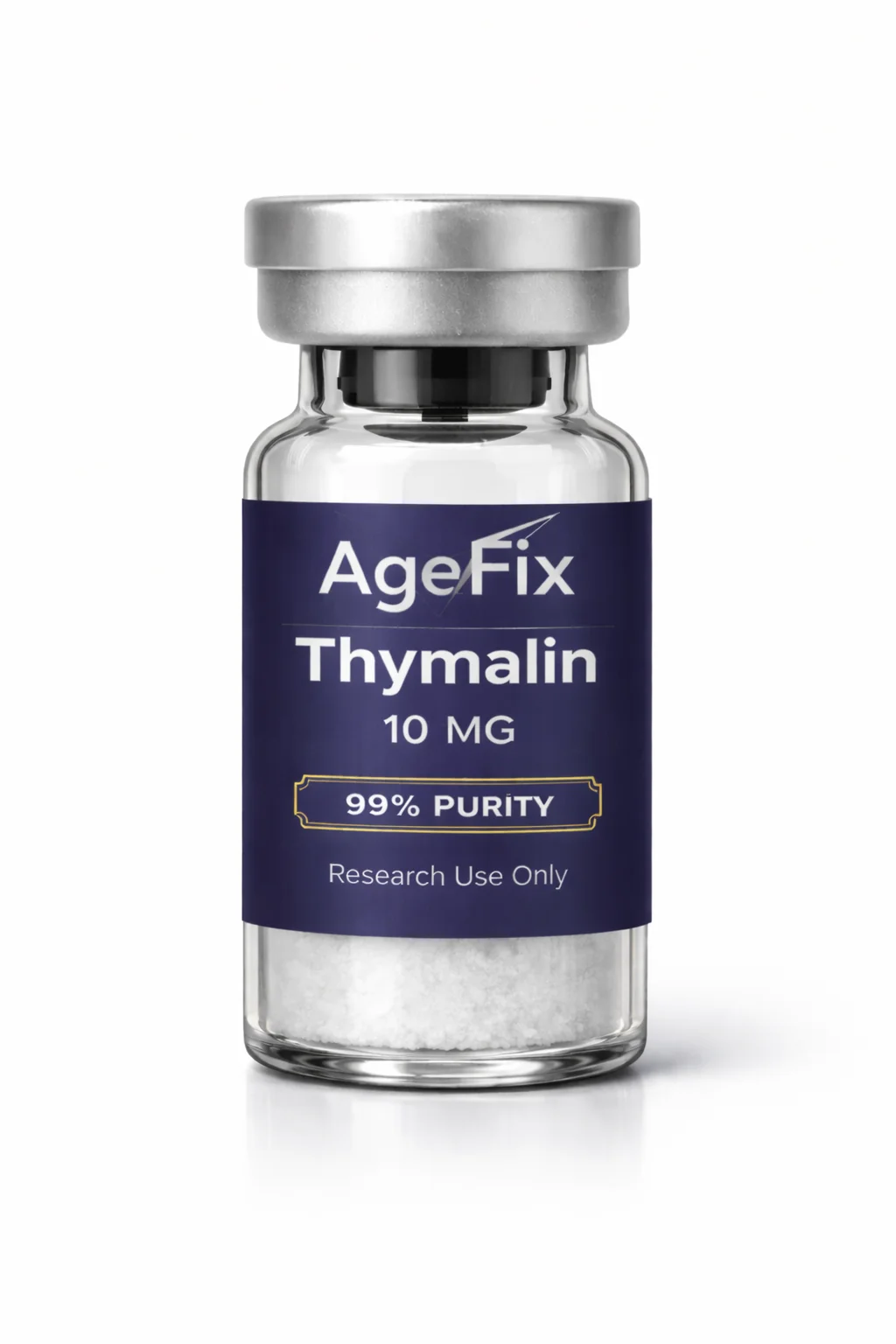
$ 59 / 10mg
999 in stock (can be backordered)
Thymalin is a synthetic dipeptide complex (Glu-Trp) derived from thymus tissue, originally developed at the St. Petersburg Institute of Bioregulation and Gerontology by Professor Vladimir Khavinson. Thymalin peptide has been studied for over 30 years in research focused on immune-system modulation, thymic function restoration, and bioregulatory mechanisms associated with aging. It is part of the Khavinson peptide family — short peptides theorized to regulate gene expression through direct DNA interaction.
Thymalin peptide is theorized to interact with specific DNA sequences to modulate gene expression in immune-related cells. Research has examined its effects on T-cell maturation, thymic involution (the age-related shrinking of the thymus), and cytokine balance. In animal models, Thymalin administration has been associated with restored thymic morphology, improved T-cell subpopulation ratios, and enhanced immune surveillance — effects of particular interest in aging-biology research where thymic decline correlates with immunosenescence.
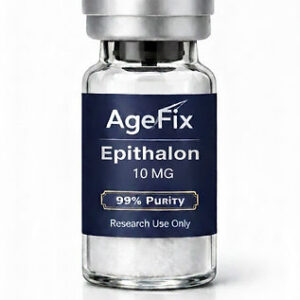
Thymosin Alpha-1 targets adaptive immunity through T-cell activation via a distinct mechanism. Epithalon — another Khavinson peptide — focuses on telomerase activation and cellular aging. LL-37 provides innate-immunity research through cathelicidin antimicrobial mechanisms.
Each 10 mg vial contains Thymalin peptide manufactured in the USA under ISO-certified conditions. Verified to ≥99% purity by HPLC analysis, with endotoxin screening below 0.1 EU/mg. Certificate of Analysis (COA) available upon request. For laboratory research use only.
Lyophilized Thymalin peptide should be stored at -20°C in a sealed container protected from light and moisture for long-term stability. For reconstitution, use bacteriostatic water and gently swirl the vial until fully dissolved — never shake. Once reconstituted, store at 2–8°C (standard laboratory refrigeration) and use within 28 days. As a short dipeptide, Thymalin is relatively stable in solution, but researchers should still prepare aliquots to minimize freeze-thaw cycles and maintain peptide integrity across experimental sessions. Always use sterile technique when withdrawing from reconstituted vials. For research use only.
Thymalin was developed in the 1970s by Vladimir Khavinson and colleagues at the Military Medical Academy and later the St. Petersburg Institute of Bioregulation and Gerontology in Russia. It was part of a systematic program to isolate short bioregulatory peptides from organ-specific tissues, with the thymus being targeted for its central role in immune function. Over the past three decades, Thymalin has been the subject of numerous publications in Russian and international biomedical journals, with studies examining its effects on thymic morphology, immune-cell populations, and lifespan extension in animal models. Khavinson’s group published landmark longevity studies in which bioregulatory peptide combinations, including Thymalin, were associated with extended lifespan in rodent models. The peptide is closely related to Epithalon (another Khavinson compound targeting telomerase), and both are studied within the framework of gene-regulatory peptide biology. All referenced research pertains to preclinical and laboratory investigations.
AgeFix Thymalin is verified to ≥99% purity by HPLC analysis and undergoes endotoxin screening to confirm levels below 0.1 EU/mg. Each 10 mg vial is manufactured in the USA under ISO-certified conditions, with a Certificate of Analysis (COA) available upon request.
While both target the immune system, Thymalin is a short bioregulatory dipeptide theorized to modulate gene expression through direct DNA interaction, focusing on thymic restoration and anti-aging pathways. Thymosin Alpha-1 is a larger 28-amino-acid peptide that activates toll-like receptors for T-cell priming, making them complementary in immune reconstitution research.
Thymalin research stems from the Khavinson bioregulatory peptide framework, where thymic decline is linked to immunosenescence and age-related disease. Animal studies have examined whether Thymalin can restore thymic morphology and improve immune surveillance markers associated with aging, making it a reference compound in healthspan and longevity research models.
We use cookies to enhance your browsing experience, provide personalized content, and improve site performance. For the best experience, please keep your browser up to date — latest browser update.